Fall 2026 Exhibition: Book of Abstracts
View/download photos and videos from the official Flickr Album (coming soon!)
The Undergraduate Research Exhibition, presented by the Office of Undergraduate Research, is a biannual, in-person event in which students showcase original research, scholarly projects, and creative works. Following the event, the EFSC community and the general public can view projects via this online archive.
Scroll to view all projects or use the alphabetical list of links by student researcher last name to view their project topic, abstract, poster, and/or creative work. Click on an image to display the larger version.
Ethical and Efficient Applications of Artificial Intelligence in Higher Education
Student Researchers: Isabella Hendrix Alaimo
Mentor: Gary Hrezo
Abstract: Artificial intelligence (AI) is increasingly implemented in organizations, offering
efficiency gains while raising ethical and environmental concerns. This project examines
how AI can be applied in higher education. It distinguishes generative AI, which produces
content from a prompt, from agentic AI, which plans and executes multiple tasks using
tools, and situates both within ethical guidance from EDUCAUSE and the U.S. Department
of Education, along with Government Accountability Office findings on environmental
and human effects.
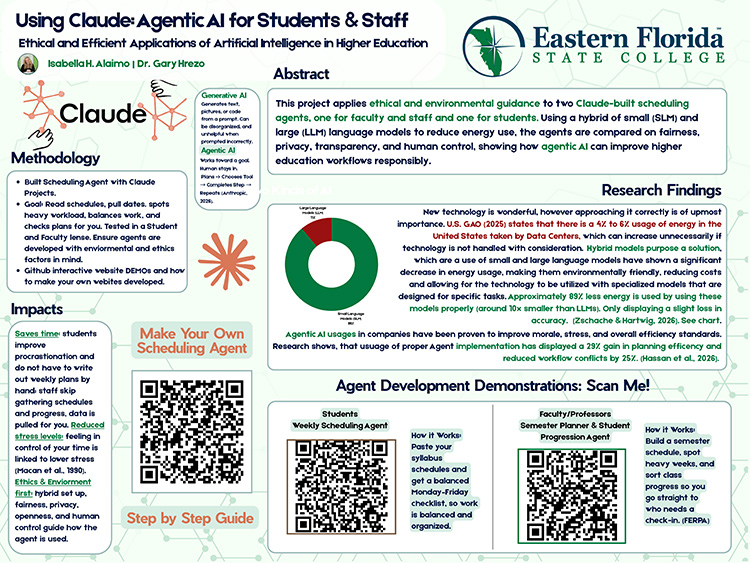
These frameworks are applied to two scheduling agents developed with Claude. For faculty
and staff, the agent builds semester schedules and gathers student progress data,
removing a manual step so staff can move directly to analysis. For students, the agent
converts syllabus assignment schedules into a balanced weekly plan that spreads work
across the semester. A “how-to” guide lets observers build their own.
The agents use a hybrid model to limit energy use. Small language models (SLMs) are specialized for particular tasks and require less energy, while large language models (LLMs) are reserved for more complex work. Extended LLMs can consume unnecessary energy, research shows that a hybrid of SLMs and LLMs can reduce energy consumption by approximately 89% (Zschache & Hartwig, 2026). Hassan et al. (2026) show that AI planning tools can improve scheduling workflows, reporting a 29% gain in planning efficiency and a 25% reduction in registration conflicts in a pilot study. Macan et al. (1990) found that students who felt more in control of their time reported less stress, suggesting a balanced plan may reduce student stress.
The two applications are compared on fairness, privacy, transparency, and human control, with attention to the privacy of student progress data. The goal is to promote ethical AI use that reduces the technology’s environmental footprint while improving higher education workflows.
Influence of Glucose Concentration on Biofilm Development by Staphylococcus aureus and Pseudomonas aeruginosa
Student Researchers: Angham Thalji Alshroof
Mentor: Ashley Spring
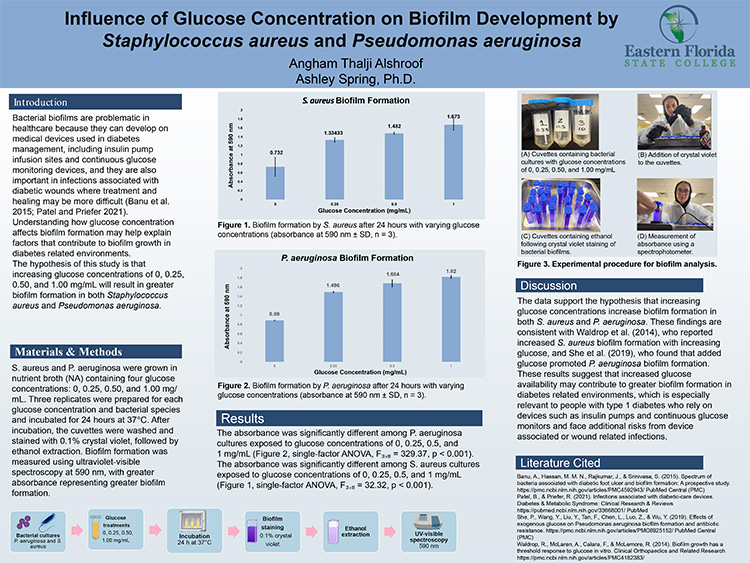
Abstract: High blood sugar in people with diabetes fuels bacterial biofilms by providing excess glucose that can support bacterial growth and biofilm formation, which slow wound healing and make infections harder to treat. The hypothesis of this study is that higher glucose concentrations will result in greater biofilm formation and that the response to glucose will differ between Staphylococcus aureus and Pseudomonas aeruginosa. Biofilm formation was measured at glucose concentrations of 0, 0.25, 0.50, and 1.00 mg/mL using crystal violet staining and ultraviolet visible spectroscopy, and both bacterial species showed an overall increase in biofilm formation as glucose concentrations increased, with variations in the strength of their responses. These findings explain how increased glucose availability contributes to biofilm development in diabetes associated infections and improve understanding of factors that make bacterial infections more difficult to manage in healthcare.
The Effects of Irrigation Water Salinity on Germination Rate and Early Root Growth on Crop Plants Under Simulated Sea-level Rise Conditions
Student Researchers: Caprisha Brown
Mentor: Ashley Spring
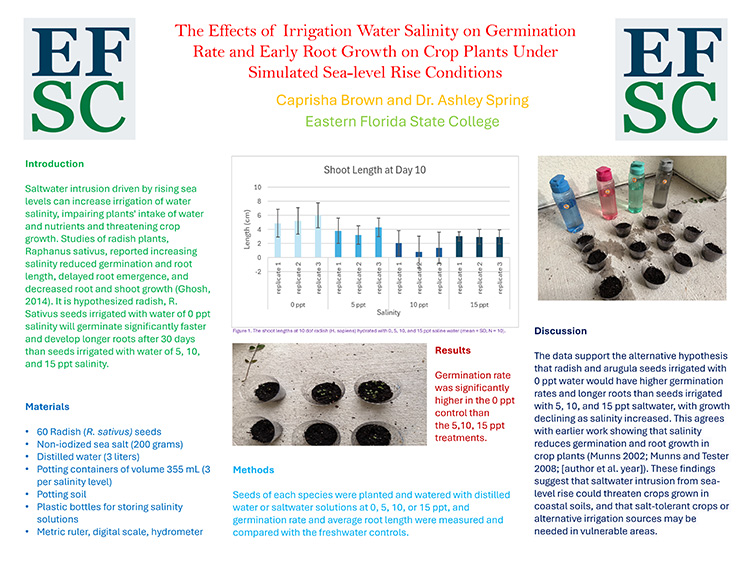
Abstract: Sea-level rise increases saltwater intrusion into freshwater irrigation sources in coastal regions, which threatens the germination and early growth of crops. The hypothesis of this study is that Raphanus sativus (radish) seeds irrigated with 0 ppt water would have significantly faster germination rates and longer crop and root lengths after 20 days than seeds with 5, 10, or 15 ppt saltwater solutions. Seeds of each species were planted and watered with distilled water or saltwater solutions at 0, 5, 10, or 15 ppt, and germination rate and average root length were measured and compared with the freshwater controls. The results supported the hypothesis, thereby confirming that saltwater intrusion threatens soil-grown crops, though salt-tolerance between species can guide crop selections, irrigation strategies, and agricultural planning in coastal communities and home gardens.
“We Are Groot”: Botanical Characters, Empathy, and Panpsychism
Student Researcher: Samuel Bynum
Mentor: Dr. Warren Jones
 Abstract: From Groot in Guardians of the Galaxy to Swamp Thing, anthropomorphic botanical beings
are merely portrayed as sympathetic human-like plants; however, through the lens of
scientific panpsychism, audience can transformatively exchange sympathy for cognitive
and /or affective empathy. Panpsychism, in both the scientific sense (originating
right after the Big Bang) and philosophical sense (revealed through the Principle
of Sufficient Reason), posits that mentality exists as a fundamental and ubiquitous
aspect of the universe, and as a result of this phenomenon, everything in the universe,
including plants, possesses some form of mind-like abilities. Consciousness, so panpsychism
states, is not relegated to sentience; consciousness is predicated on that which disposes
a phenomenon to perform a set of behaviors. Analyzing Sci-Fi narratives containing
anthropomorphic botanical beings through this lens allows us to form a deeper relation
with lifeforms typically regarded as inanimate and insentient, developing more sympathy,
if not empathy, with real world plants, by understanding the different layers of mind-like
aspects believed to exist within these anthropomorphic botanical characters and their
real-life counterparts, and to gain a broader view of consciousness and sentience
as a whole. Using panpsychism to examine the experiences of anthropomorphized botanical
characters allows us to foster deeper understanding and relation to these experiences,
as we typically view these characters through a human-centric scope. As the theory
of panpsychism grants consciousness to all things in the universe, the theory may
be applied to a wide variety of anthropomorphic characters beyond the botanical variety.
One can extend the idea of fostering sympathy for others through a deeper understanding
of mental processes to many things beyond plants, such as animals and even inanimate
objects.
Social Hierarchy, Rank Reversal, and Conflict Resolution in Captive White-Nosed Coati
(Nasua narica) Bands: Juvenile-Adult Interactions
Student Researcher: Italia Castro
Mentor: Jessica Schrader
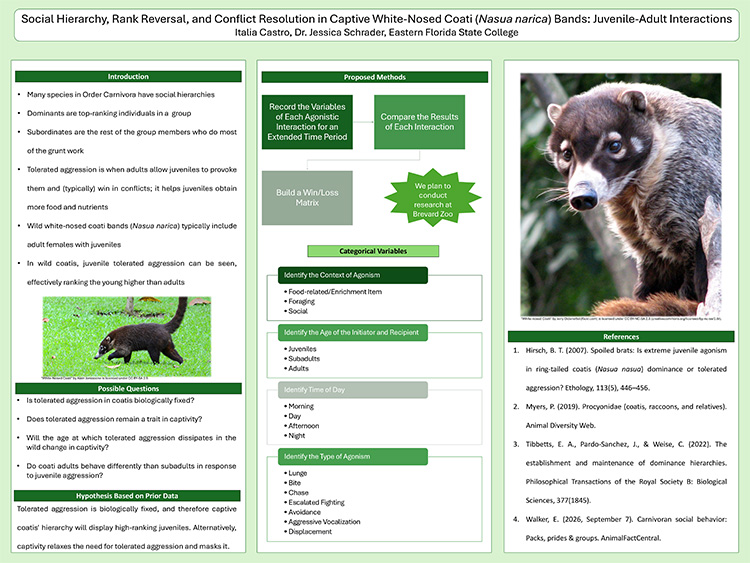 Abstract: Social hierarchy shapes group survival, fitness, and quality of life in many species
of the mammalian order Carnivora. Dominant-subordinate dynamics and the requirements
for maintaining relationships, succession strategies, task specialization within cooperatively
breeding species, and the winner-loser effect all influence the social structure of
species with such hierarchies. Research in this area has concentrated on well-studied
species in the wild such as spotted hyenas and gray wolves, while white-nosed coatis
(Nasua narica) remain relatively understudied, particularly in captive settings. In
addition, the literature suggests hierarchy can be categorizable and predictable,
though few studies have examined hierarchies in which juveniles hold the high rank,
as is seen in white-nosed coatis, especially in captivity. This gaps points toward
the need for further study in this area, which motivates the question of whether juvenile
white-nosed coatis attain high rank in captivity and, if so, how juveniles and adults
handle conflict over resources, including food and enrichment items. Here, I will
explore potential methods to address this question.
Zoeae and megalopae abundance of the white-tipped mud crab (Rhithropanopeus harrisii)
in the freshwater Lake Monroe, Florida over temporal scales.
Student Researcher: Kayla Elkhay
Mentor: Dr. Ashley Spring
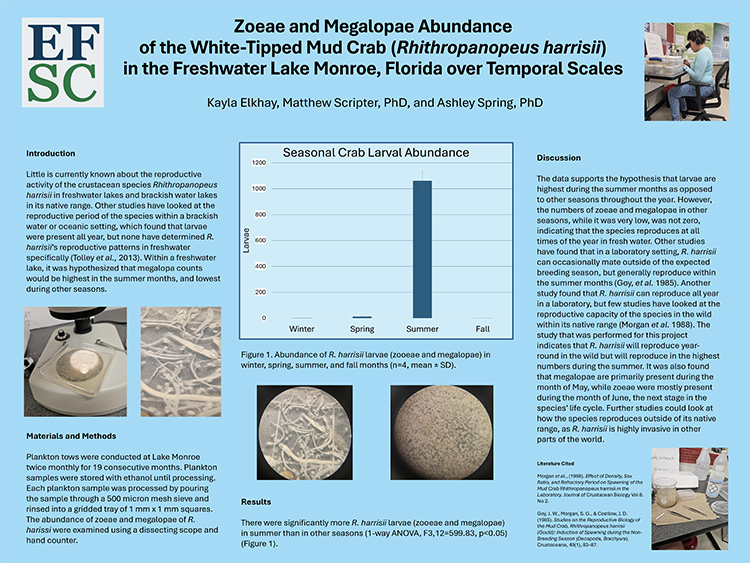 Abstract: Saline seeps in the freshwater Lake Monroe, Florida, cause an influx of the brackish
water crustacean species Rhitropanopeus harrisii into the lake’s water system. Little
is known about the species’ reproductive patterns within freshwater lakes, and there
may be differences in larval population sizes throughout the year, due to the fact
that most crustacean species breed only during the warmer months, so it is hypothesized
that there will be significantly more larvae during the summer months. Larval samples
were collected over 12 months via plankton nets and the larvae were counted under
a microscope for samples in each season. This research contributes to existing knowledge
regarding the reproductive patterns of R. harrisii, especially in bodies of fresh
water.
“Walk tall…my friends”: Grief in Final Fantasy XV through the lens of Narrative Transportation
Theory
Student Researcher: Katie Gaver
Mentor: Liz Trepanier
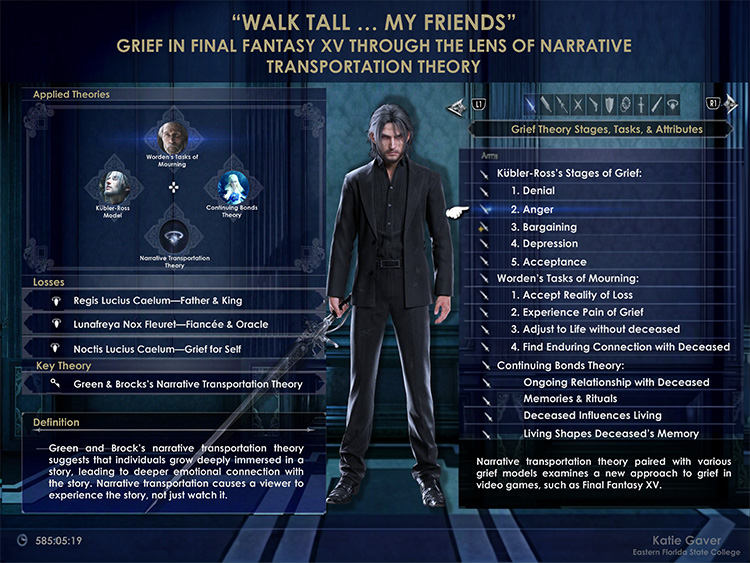 Abstract: A player’s narrative transportation in to a story affects how they process grief within
narratives, such as Final Fantasy XV. Green and Brock’s Narrative Transportation theory
paired with various grief models, such as Worden’s tasks of mourning, Continuing Bonds
theory, and the Kübler-Ross- Model form a well-developed picture of Noctis’ emotional
and physical grief journey. Narrative Transportation theory and grief theories paired
together allows a player to feel the grief, not just observe it. Final Fantasy XV
emphasizes an emotional plotline that falls flat unless the player is willing to invest
themselves emotionally and connect with it as if they were also taking the journey.
Many critics of Final Fantasy XV report the games’ story to be lacking or rushed,
but those who reported that they were transported in to the story empathized with
the characters, felt the main character’s emotional journey alongside him, and connected
deeply to the games ending. The main character, Noctis, grieves three losses in the
story of Final Fantasy XV that impacts emotionally invested players by transporting
them into his grief. Early in the game Noctis’s grieves his father, which will be
examined through Worden’s Tasks of Mourning. Halfway through the game Noctis witnesses
the murder of his fiancée, which will be paired with the Continuing Bonds theory of
grief. Lastly, Noctis grieves his own life once he learns of his destiny to die to
save the world. Noctis’ grief for himself will be examined through the Kübler-Ross
Model, reflecting Elisabeth Kubler-Ross’ book On Death and Dying, which originally
reflected how terminally ill patients coped with their approaching death.
Tours of the Undiscovered Country: Over The Garden Wall, Dante’s Inferno, Narrative
Structure, Shifting Ideals, and Anthropological Motifs
Student Researcher: Marissa Lugo
Mentor: Liz Trepanier
Abstract: From the ancient Sumerian Inanna’s Descent to the modern Over the Garden Wall humans
have long utilized similar narrative structure to map cosmologies behind shifting
theologies and reflect, equally as transient, societal/cultural ideals of the timeframes
in which they present; the narrative structure largely remains unchanged signifying
an anthropological motif similar to the use of floral funerary arrangements or burial
trinkets that reveal a consistent relationship with death among the human race. When
relating the stories to their accompanying theologies and timeframes, Over the Garden
Wall becomes uniquely situated to represent modern rising neopagan practices, just
as Dante’s Inferno once reflected Grecco/Roman values in medieval Italian Catholicism,
or how Ardā Wīrāz Nāmag (referred to as The Iranian Divina Commedia) reflected Zoroastrian
beliefs in Sasanian Persia. Although many of these stories have been interpreted through
the lens of Joseph Campbell’s “Hero’s Journey,” their recurring features could warrant
a distinction, as they do not consistently conform to the seventeen-stage monomyth,
nor can they be fully examined if reduced to the three-part structure. Protagonists
on these journeys do not typically seek access to the otherworld they visit, as much
as access is bestowed upon them, imposed upon them, or encountered accidentally (Inanna
serving as a sort of prototypical exception). An analysis of these narratives and
their corresponding ideologies reflect that, regardless of changing cultural interpretations
of death, certain anthropological motifs not only persist, but also suggest an innate
human relationship with death, and a desire to understand the unknowable.
Effect of Temperature and Salinity on the Burrowing Rates of Mole Crabs, Emerita Talpodia
Student Researcher: Drew O'Shea
Mentor: Dr. Warren Jones
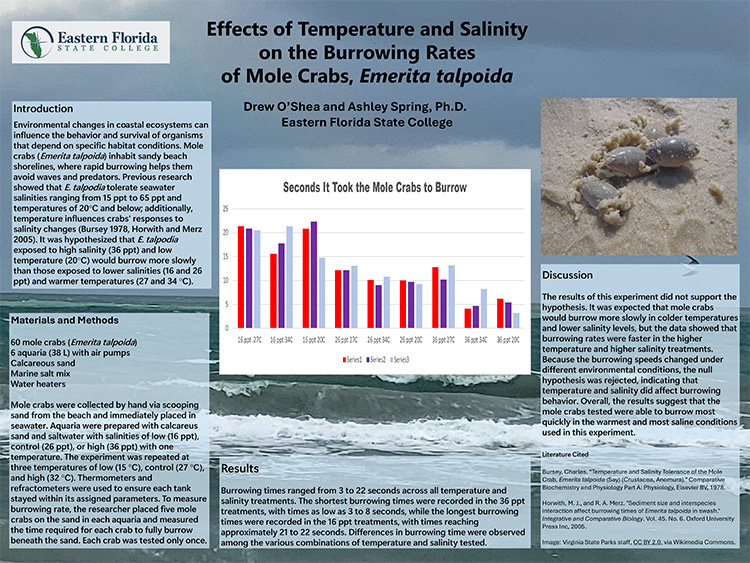 Abstract: Every wave that crashes onto a beach can change the conditions required for survival
of mole crabs; however, it is not fully understood how environmental changes and ecosystem
disruptions may affect these ecologically important crustaceans. Rapid burrowing into
the sand serves as a primary defense mechanism for mole crabs, helping them avoid
predators and harsh environmental conditions. This study examined how temperature
and salinity influence the burrowing rate of mole crabs (Emerita talpoida). Mole crabs
were exposed to variations in temperature and salinity, and the time it took them
to burrow into the sand was recorded. It was hypothesized that colder temperatures
and higher salinity levels would slow burrowing rates; however, the results indicated
that these environmental factors did not significantly affect burrowing time. Understanding
these responses may help predict how changing coastal conditions affect mole crab
behavior and survival in sandy beach ecosystems.
"I Don't Want to Just Watch. I Want to Be a Part of It.": Over-Animation, Attention
Economy, and Call of the Night
Student Researcher: Aden Price
Mentor: Dr. Warren Jones
Abstract: The over-animation of contemporary anime reveals that the hyper-stimulated attention
economy proffers exciting, yet vapid, narratives, which Call of the Night not only
stands apart from but seems to defy modern fast-paced stories. Using the foundation
of Jacinthe Pare’s work, we can determine how over animation of modern visual storytelling,
meaning the ostentatious effects, cacophony of sounds and music, and fast-paced sequences,
disrupt cognitive focus away from the story telling and localizes the viewer’s attention
to keeping pace with a hectic stream of sensory information. This over-animation doesn’t
occur in all visual media, but the trend seems to moving into that direction, overexposing
for the sake of big dopamine hitting scenes while casting the main story as secondary.
This over-animation and overexposure creates a series of problems, mostly centering
on problems revealed in the discussions of the attention-economy but also in the sense
of cognition. Anime such as Dragon Ball Super, where the story is delivered through
extremely fast scenes and very frequent expositions, denies the viewer the ability
or time to form thought, yet less critical thought, concerning the story. Slower paced
stories, such as Call of the Night, use detailed sky lines and world building environmental
settings as well as more coherent and slow sound and music, opening spaces for viewers
to contemplate the story while keeping the interest of the viewer.
Evaluating Age Dependent Metabolic Interactions with Amyloid beta in Caenorhabditis elegans as a Novel Approach for Modeling Multi Factor Based Neurodegeneration in Alzheimer's Disease Year 2
Student Researcher: Riya Reddy
Mentor: Kirstin Cutshaw
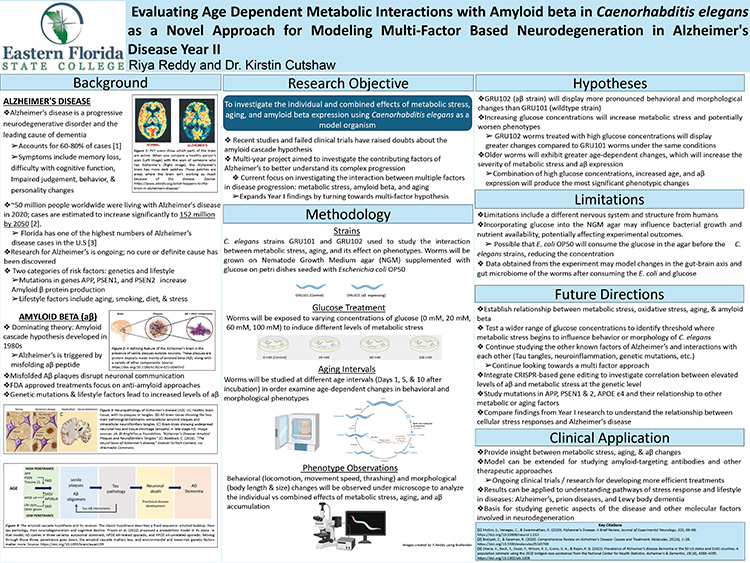 Abstract: Alzheimer’s disease affects millions of individuals worldwide, with Florida having
one of the highest numbers of cases in the United States. There is no cure for this
disease and treatments only slow its progression. Current research is suggesting focusing
on the multi factor hypothesis of Alzheimer’s, where multiple interconnected factors
contribute to the disease rather than solely one, such as amyloid beta.
One aspect of Alzheimer’s disease that needs to be further studied is the variability in individual susceptibility as individuals carrying genetic risk factors do not always develop the disease while individuals without these genes can still develop Alzheimer’s. Similarly, aging does not always lead to significant neurodegeneration, as many older individuals are able to stay cognitively healthy without signs of neurodegeneration.
One potential contributor to the disease is metabolic dysfunction. Diets high in glucose or disruptions in metabolism may influence pathways with amyloid beta accumulation and age-related changes to contribute to neurodegeneration. Caenorhabditis elegans can be used as a cost-effective and scalable model organism to study how metabolic conditions and aging interact with amyloid beta to affect neurodegeneration.
Michelangelo's The Last Judgment: Revelations and Restorations of a Masterpiece
Student Researcher: Antonella Ripepi
Mentor: Anthony Akers
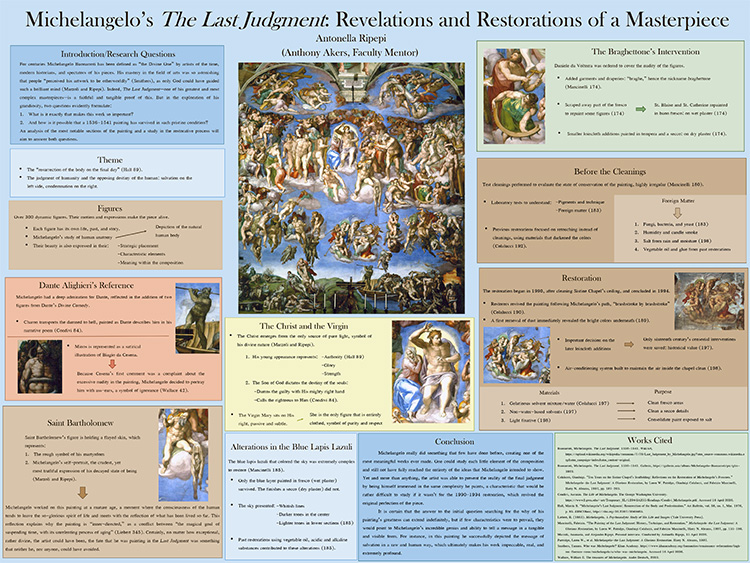 Abstract: This research focuses on the study and restorations of the Last Judgment, the 1536–1541
painting in the Sistine Chapel by Michelangelo Buonarroti. Every section of the painting
contains a story on its own, one that tells what the figures represent and why their
placement is relevant within the larger composition, but mostly one that conveys Michelangelo’s
intended message. All this makes it almost impossible to study in detail each character,
symbol, and connection in the piece. Therefore, the analysis specifically focuses
on the most important components that make this fresco such a valuable masterpiece.
Among these are the figures of Christ and the Virgin, which drive the central theme;
some elements of Dante’s Divine Comedy as a way to define the relation between poetry
and painting; and the figure of Saint Bartholomew, which is a direct representation
of the artist’s state of mind.
Yet a painting of this magnitude would be highly difficult to analyze if it were not
for the continuous restorations and cleanings made from 1990 to 1994. Some sections
would be partially hidden by decades of dust, darkened to the point where colors wouldn’t
be recognizable. Others would carry the weight of humidity and foreign matter. Indeed,
these intensive restorations are vital for the intact survival of this piece, and
for the continued study of scholars and the general public alike.
Testing the True Power of Sunscreens
Student Researcher: Hannah Schwerer
Mentor: Ashley Spring
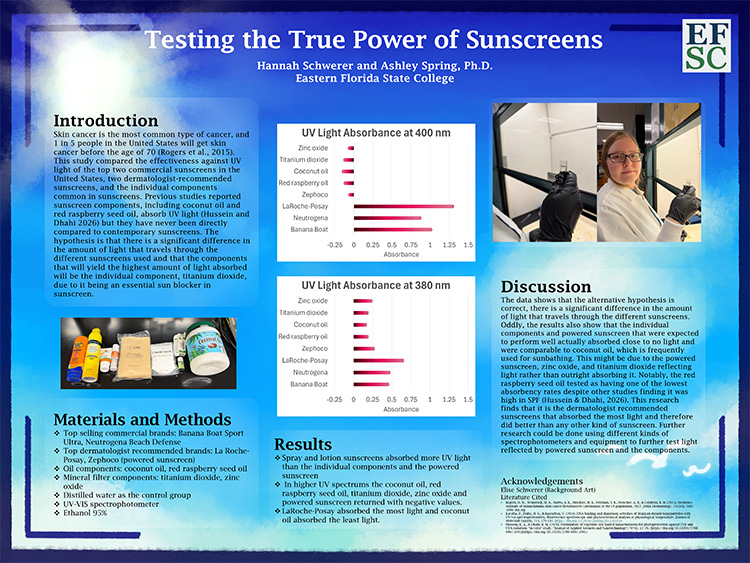 Abstract: Using sunscreen with the highest UV-absorbing components is crucial to preventing
skin cancer. This study tested various methods of sun protection using ultraviolet
visible spectroscopy to find which one was most effective at blocking harmful sun
exposure. The results of this study support the alternative hypothesis that there
is a significant difference in the amount of light that travels through the different
sunscreens used. Multiple brands of sunscreens and individual ingredients used frequently
in the manufacturing of sunscreen were placed in a quartz cuvette filled with ethyl
alcohol and were tested with UV-VIS spectrophotometry at 380, 390 and 400 nm. The
results revealed that mixtures of sunscreen ingredients maximizes light absorption
compared to individual ingredients, and commercially manufactured and dermatologist
recommended sunscreens demonstrate disparate levels of spectrophotometric absorbance.
The Effects of Different Light Exposure Durations on the Growth of Bell Pepper Seedlings
(Capsicum annuum)
Student Researcher: Janaisha Scott
Mentor: Ashley Spring
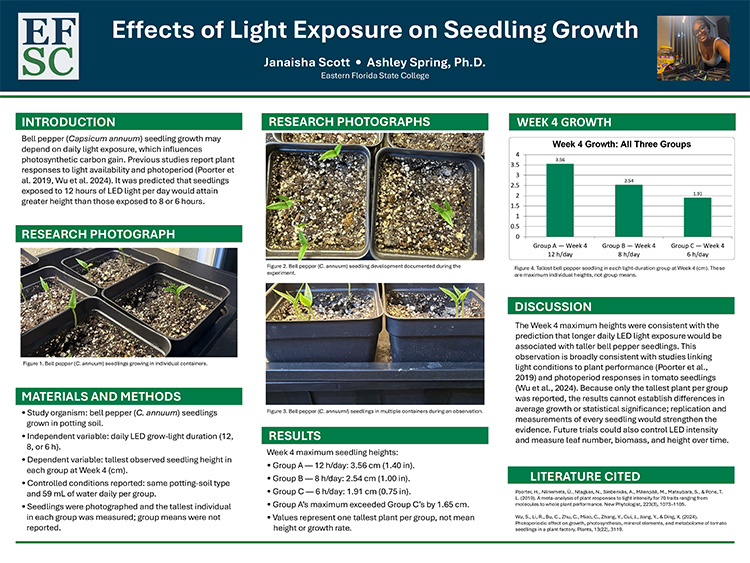 Abstract: This study investigated the effects of varying daily light exposure durations on the
growth of bell pepper seedlings (Capsicum annuum) over a four-week period. The experiment
consisted of three groups exposed to different durations of LED grow light: Group
A received 12 hours daily, Group B received 8 hours, and Group C received 6 hours,
while all groups were maintained in potting soil and received 2 ounces of water daily
to promote consistent growing conditions. At the end of the experiment, Group A demonstrated
the greatest growth, with its tallest seedling reaching 1.4 inches, followed by Group
B at 1.0 inch and Group C at 0.75 inches. These findings suggest that longer daily
light exposure may promote greater seedling growth under the conditions examined,
supporting the hypothesis that light duration influences early plant development.
Overall, this research highlights the importance of adequate light exposure in supporting
photosynthesis and healthy plant growth, while providing a foundation for further
investigations into optimal lighting conditions for bell pepper cultivation.
The Director: NPCs and Contrived Empathy in Left for Dead and the Last of Us
Student Researcher: Conrad Shaw
Mentor: Warren Jones
Abstract: Contemporary fantasy video gaming has increased a focus on non-player character’s
(NPC’s) behaviors in response to player character actions and choices, the NPC’s reactions
to their environment, and NPCs with the players, themselves. The complexity of these
interactions reveals players’ impositions on NPCs, the player’s perceptions of anthropomorphism,
the players’ affective and/or cognitive empathies for NPCs, as well as players abilities
to bond, in a parasocial sense, with NPCs. Reactive systems, such as the Director
System pioneered by Valve in Left 4 Dead, creates a sub-narrative based on the players’
actions, pacing, and achievements, alongside multiple other factors depending on the
game. Further, reactive NPC systems go beyond simple if/then inputs from the game
character, focusing on the individual, the player, playing the game—using their voices
to interact (Repo, Alien: Isolation, Lethal Company), or their eyes to skip through
time (Before Your Eyes). In S.T.A.L.K.E.R., the A-Life system generates NPCs who roam
the game world, fight their opposing enemies, and complete their own goals while the
player is nowhere near them, advancing world-building and going beyond a relationship
between the character and the world, with the world independently creating its own
stories. Players in these communities who become aware of these systems personify
them, such as naming the Director specifically and giving it “life,” believing the
system consciously chose to punish or bless the player. The belief that a game is
responding to me differently than other players is notably captured in The Last of
Us II during the Abby vs. Ellie fight. In this fight, players switch from playing
as Ellie to Abby; memes and narratives were widely created that Ellie would fight
in the same manner as they had fought previous enemies, acting as a facsimile of the
player, when in reality no such system was present.
Corporatizing Neuroscience Fiction: Severance, Black Mirror, and the Commercialization
of Consciousness
Student Researcher: Amber Small
Mentor: Dr. Warren Jones

Abstract: Karl Friston’s frameworks of Free Energy Principle and Active Inference reveal the exploitation of characters' consciousnesses in modern Sci-Fi such as Severance and Black Mirror. The Free Energy Principle (FEP) claims a position of being a grand unified theory, by stating that living organisms seek to lower surprisals stemming from discrepancies between model of the world and the actual world. The Free Energy Principle is managed by two active inferences, referred to in FEP studies as perception and action. Through Friston's work we can avoid amorphous discussions of free will, rights, and choice to perceive a more insidious, applied control of thought in a variety of narratives. From Plato to today's science fiction, discussions of the brain, or mind, as a commodity (think Brave New World or Candy House) have evolved into procedures altering character's memories, thoughts, and brain functions (such as Severance and Black Mirror) to manipulate and control. Hume's 18th century, “Whatever is conceivable is metaphysically possible,” has evolved (or perhaps even devolved) into a 21st century “Whatever is conceivable is physically (neuro-scientifically) possible,” as current Sci-Fi narratives reveal. Neuroscientist, Rodrigo Quiroga traces these possibilities through stories such as Planet of the Apes, Minority Report, The Matrix, Inception, and others to reveal a timeline of human cognition and the rapid advancement of neurotechnology's foray into previously unthought capabilities, all of which begs the question “where is the line” in neuro-cognitive alterations or manipulations. Both fictively and in real life, neuroscience has intensified cultural anxieties concerning the potential negative effects on identity, authenticity, privacy, agency, safety and security.
Slaying the Patriarchy
Student Researcher: Jennifer Stalker
Mentor: Liz Trepanier
Abstract: This research demonstrates how the on-screen shift toward female monstrosity and the decentering of men directly reflects a global cultural tipping point. Using Barbara Creed’s Return of the Monstrous-Feminine, this study bridges media analysis of Yellowjackets, Motherland: Fort Salem, and Naomi Alderman’s The Power with urgent sociological realities including rising awareness of global violence against women, the supposed "male loneliness epidemic," declining fertility rates, and South Korea’s radical 4B movement, relating this evolution back to the cultural tipping point of Buffy the Vampire Slayer. Buffy broke tradition by flipping patriarchal narratives, transforming the stereotypical horror victim (a small, upbeat blonde) into the aggressor. While Creed’s earlier work showed how traditional horror casts female biology and strength as "abject" i.e things society rejects as disturbing threats to the established order, her 2022 follow-up reveals how contemporary feminist narratives reclaim this monstrosity as an intentional means of revolt. Pairing Creed’s framework with Julia Kristeva’s concept of abjection in Powers of Horror, this project examines how Buffy contrasted with similar shows of the time like Xena and Charmed through Buffy’s relationship with her strength, dating, and dark adult struggles in seasons six and seven. Ultimately, Buffy paved the way for the unapologetic feminine violence of modern television, where women become monstrous forces of nature to overthrow patriarchal control. Analyzing these shows alongside rising awareness of violence against women, the "male loneliness epidemic," declining fertility rates, and the 4B movement illustrates how the monstrous-feminine has evolved from a cinematic trope into a real-world philosophy of systemic refusal.
Can In Vitro Meat Be a Viable and Sustainable Alternative to Conventional Meat in
the Future?
Student Researcher: Mila Tang
Mentor: Ashley Spring
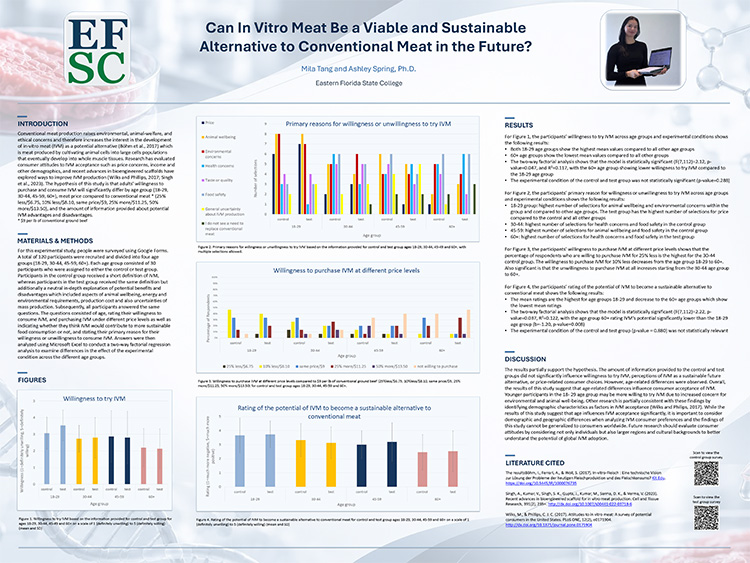
Abstract: Conventional meat production raises environmental, animal-welfare, and ethical concerns and therefore increases the interest in the development of in vitro meat (IVM) as a potential alternative. The hypothesis of this study is that adults’ willingness to purchase and consume IVM will differ significantly depending on price level, age group, and the amount of information provided about its potential advantages and disadvantages. An online survey was conducted in which participants were assigned to either a control group that received a brief definition of IVM or an experimental group that received additional in-depth information. Furthermore, their willingness to try and regularly consume IVM at different price levels was assessed. Findings indicate that the willingness to consume IVM decreases with increasing. Adults aged 18–29 showed the highest acceptance and those aged 60 and above exhibited the lowest, but the amount of information provided has a comparatively limited influence on consumer acceptance.
Preventative Methods of Phosphorus Mitigation in Runoff Directed Towards the Indian
River Lagoon, Brevard County, FL
Student Researcher: Leevi Varino
Mentor: Emily Kraus
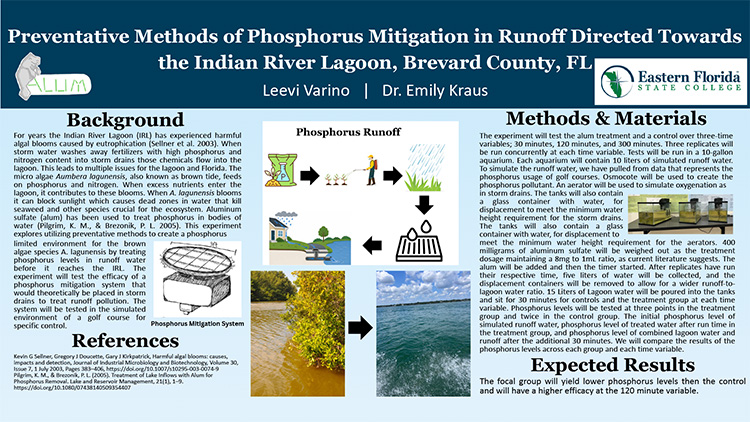
Abstract: For years the Indian River Lagoon (IRL) has experienced harmful algal blooms caused by eutrophication (Sellner et al. 2003). When storm water washes away fertilizers with high phosphorus and nitrogen content into storm drains those chemicals flow into the lagoon. This leads to multiple issues for the lagoon and Florida. The micro algae Aumbera lagunensis, also known as brown tide, feeds on phosphorus and nitrogen. When excess nutrients enter the lagoon, it contributes to these blooms. When A. lagunensis blooms it can block sunlight which causes dead zones in water that kill seaweed and other species crucial for the ecosystem. Aluminum sulfate (alum) has been used to treat phosphorus in bodies of water (Pilgrim, K. M., & Brezonik, P. L. 2005). This experiment explores utilizing preventative methods to create a phosphorus limited environment for the brown algae species A. lagunensis by treating phosphorus levels in runoff water before it reaches the IRL. The experiment will test the efficacy of a phosphorus mitigation system that would theoretically be placed in storm drains to treat runoff pollution. The system will be tested in the simulated environment of a golf course for specific control.
Dumbing Down Kids: Educational Sci-Fi/Fantasy Children’s Media, Hyperstimulation,
and the Attention Economy
Student Researcher: Daniela Vongnaraj
Mentor: Dr. Warren Jones
Abstract: From the sci-fi fantasy of The Magic School Bus and The Adventures of Jimmy Neutron,
Boy Genius to STEM-centric Bill Nye the Science Guy and SciShowKids on YouTube, educational
children’s shows weave fiction, in Harari's sense of the word, and fact to teach children
science, yet the medium often undermines learning with overstimulation and hyperstimulation.
Lillard and Peterson's research into overstimulation (excessively fast pacing, overly
bright and flashy scenes, and loud sounds) reveals how too much stimulation impacts
children’s ability to learn and comprehend. Many current children’s shows lack the
pedagogy and proper stimulation that fosters curiosity that stimulates cognitive function,
mistaking McLuhan's "medium is the message" with "medium, not message." This medium
centricity has intensified in the attention economy, according to Söğütlüler: the
more a child spends time on a streaming platform like YouTube or Disney+ the more
revenue is earned. These streaming companies have little incentive to invest in or
focus on high-quality educational content. Without providing adequate mental stimulation
to foster curiosity and interest in learning STEM subjects, children will have a harder
time advancing though education, expecting education to be as flare-filled and flashy
as their media. As children’s media progresses the line for what is an acceptable
amount of hyperstimulation keeps moving further away.